
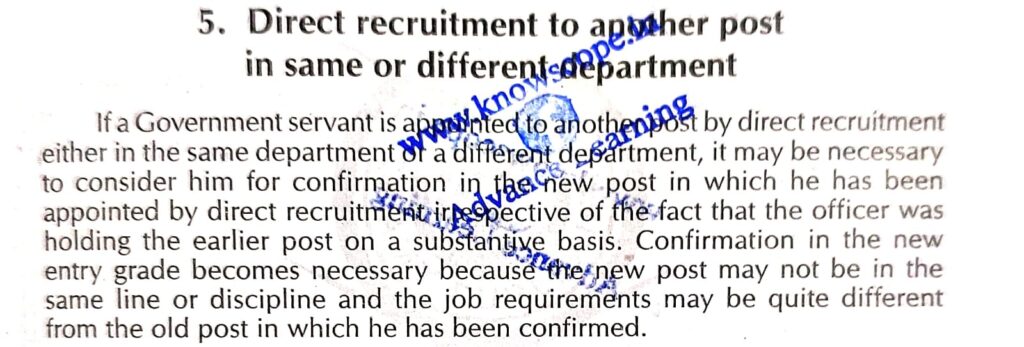
DIRECT RECRUITMENT TO ANOTHER POST IN THE SAME OR DIFFERENT DEPARTMENT
Introduction
Direct recruitment to another post in the same or a different department is an important concept in government service administration. It refers to the appointment of an individual to a new post through the process of open selection rather than promotion or transfer. This means the candidate competes with others and is selected based on eligibility, merit, and recruitment rules applicable to the post.
In modern public administration, direct recruitment ensures transparency, fairness, and equal opportunity. Whether an employee already working in government service or an external candidate, direct recruitment treats all eligible applicants according to the same selection criteria. This approach strengthens institutional efficiency and introduces fresh talent into government systems.
Meaning of Direct Recruitment
Direct recruitment means filling a post by selecting candidates through open competition. The selection may involve written examinations, skill tests, interviews, or a combination of these methods. The recruitment is governed strictly by Recruitment Rules (RRs), which define eligibility, age limits, qualifications, experience, and the method of selection.
When a government employee applies for another post through direct recruitment, it is treated as a fresh appointment, even if the post is within the same department. The employee must satisfy all eligibility conditions like any other candidate.
Direct Recruitment within the Same Department
Direct recruitment to another post within the same department occurs when an employee applies for a different cadre or position that is not part of the promotion channel. For example, a clerical staff member may apply for a technical post through direct recruitment if the recruitment rules allow.
In such cases, the employee participates in the selection process independently. Seniority in the existing post does not guarantee selection. Once selected, the appointment is treated as a new entry into that post’s cadre.
This method allows employees to shift career paths and explore roles aligned with their qualifications or interests.
Direct Recruitment to a Different Department
Government employees may also apply for posts in other departments through direct recruitment. This is common when employees seek career growth, better opportunities, or specialized roles.
When selected in another department, the employee usually resigns from the previous post or joins through proper technical resignation. Technical resignation protects certain service benefits such as leave and pension continuity, subject to rules.
This process supports mobility within government service while maintaining procedural discipline.
Eligibility Conditions
Eligibility is determined strictly by Recruitment Rules. The applicant must meet educational qualifications, experience requirements, age criteria, and other conditions mentioned in the notification.
Government employees may receive age relaxation as per rules. However, they must provide proper permission or No Objection Certificate (NOC) from their department where required.
Failure to meet eligibility conditions can lead to rejection, even if the applicant is already a government employee.
Selection Procedure
The selection process for direct recruitment is designed to ensure fairness. It typically includes written examinations, skill tests, document verification, and interviews.
Merit lists are prepared based on performance. Reservation policies are applied according to government norms.
For serving employees, participation in the selection process does not guarantee preference unless specifically provided in the recruitment rules.
Role of Recruitment Rules
Recruitment Rules act as the foundation for direct recruitment. They specify the method of recruitment, proportion of posts filled through direct recruitment, and eligibility criteria.
They also clarify whether departmental candidates receive any relaxation. Amendments to Recruitment Rules may change eligibility or method of recruitment over time.
Understanding Recruitment Rules is essential for employees planning to apply for another post.
Technical Resignation
Technical resignation is an important concept when an employee moves to another post through direct recruitment in government service. Unlike ordinary resignation, technical resignation allows continuity of service benefits.
These benefits may include leave balance transfer, past service counting for pension, and protection of pay under certain conditions.
Technical resignation ensures that employees are not penalized for career mobility within government service.
Click here to download the full notification in PDF
Click here to download the Swamy’s Handbook in PDF
Pay Protection and Service Benefits
In some cases, employees selected through direct recruitment may receive pay protection. This depends on rules, nature of appointment, and whether the move is considered in public interest.
Service benefits such as pension continuity and leave transfer are subject to administrative approval and applicable rules.
Employees must verify these aspects before accepting the new appointment.
Importance of No Objection Certificate (NOC)
Many recruitment notifications require serving employees to submit an NOC from their current department. This confirms that the department allows the employee to participate in the recruitment process.
NOC ensures administrative transparency and prevents disputes later. However, some recruitments allow application without NOC initially, requiring it at the time of joining.
Employees should carefully read instructions in the recruitment notification.
Advantages of Direct Recruitment to Another Post
Direct recruitment provides several advantages. It allows employees to change career streams, gain higher responsibilities, and access better opportunities.
It also helps government organizations bring in skilled individuals who may not be available through promotion channels.
For the system, this method introduces innovation, diversity, and updated skill sets.
Challenges and Considerations
Despite its benefits, direct recruitment to another post involves challenges. Employees face uncertainty because selection is competitive. There may also be procedural complexities related to resignation, relieving, and benefit transfer.
Another challenge is adjusting to a new cadre, department, or work culture. Employees must evaluate long-term career impact before making a decision.
Proper planning and understanding of rules reduce these challenges.
Administrative Perspective
From an administrative viewpoint, direct recruitment ensures merit-based selection. It allows departments to fill specialized posts without waiting for internal promotion pipelines.
It also supports workforce planning by balancing experience and new talent.
Clear recruitment policies reduce disputes and improve organizational efficiency.
Best Practices for Employees
Employees considering direct recruitment to another post should carefully read recruitment notifications, verify eligibility, and understand service implications.
Consulting establishment sections, reviewing Recruitment Rules, and seeking clarification about technical resignation are important steps.
Preparation for competitive examinations and documentation readiness improves chances of selection.
Future Trends
Direct recruitment is evolving with digital recruitment platforms, online examinations, and competency-based assessments. Cross-department mobility is becoming more common as government work becomes specialized.
Future recruitment frameworks may focus more on skills, domain expertise, and flexibility rather than traditional career paths.
This trend supports a dynamic and professional public service system.
Conclusion
Direct recruitment to another post in the same or different department is a vital mechanism that supports mobility, merit, and modernization in government service. It provides employees with opportunities to reshape their careers while enabling departments to access the right talent.
Although the process involves procedural steps such as eligibility verification, NOC, and technical resignation, it ultimately strengthens administrative efficiency and individual growth. A clear understanding of Recruitment Rules, service implications, and long-term career goals helps employees make informed decisions.
In an evolving governance environment, direct recruitment will continue to play a significant role in building a skilled, adaptable, and transparent public administration system.
FAQs
1. Is direct recruitment considered a promotion?
No, direct recruitment is treated as a fresh appointment even for serving employees.
2. What is technical resignation?
Technical resignation allows an employee to join another government post without losing past service benefits, subject to rules.
3. Can a government employee apply for posts in another department?
Yes, employees can apply through direct recruitment if they meet eligibility conditions.
4. Is NOC always required?
Not always. It depends on the recruitment notification, but it is often required at the time of joining.
5. Does pay protection apply in direct recruitment?
Pay protection may apply in certain cases depending on rules and administrative approval.
Click here to download the Swamy’s Handbook in PDF
Click here to download the full notification in PDF
Disclaimer:
The information presented in this article on “Direct Recruitment to Another Post in the Same or Different Department” is intended solely for general informational and educational purposes. Although efforts have been made to ensure accuracy, the content should not be treated as an official interpretation of government rules, regulations, or recruitment policies.
Recruitment procedures, eligibility conditions, service benefits, and administrative guidelines may vary across departments and may change from time to time based on government orders, notifications, and amendments to Recruitment Rules.
Readers are strongly advised to consult the latest official circulars, recruitment notifications, departmental instructions, and authorized rule books before taking any decision related to application, resignation, service benefits, or joining another post.
The author and publisher shall not be responsible for any loss, error, omission, or consequences arising from the use of this information. This article does not substitute official documents or professional administrative advice.
For more information and updates please follow the page and don’t forget to leave your comment.