
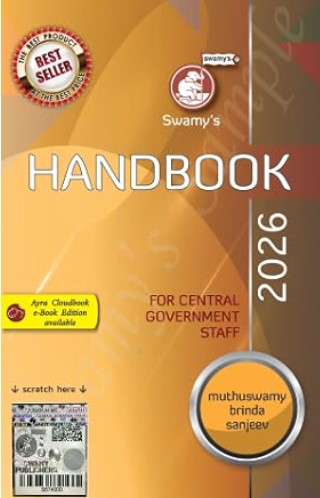
Medical Attendance Rules for Central Government Staffs as per Swamy Handbooks
Introduction to Medical Attendance Rules (MAR)
Medical expenses can be unpredictable, stressful, and sometimes overwhelming. For Central Government employees, this burden is significantly reduced thanks to the Medical Attendance Rules (MAR). These rules act like a safety net, ensuring that government staff and their families receive timely and affordable medical care without financial shock.
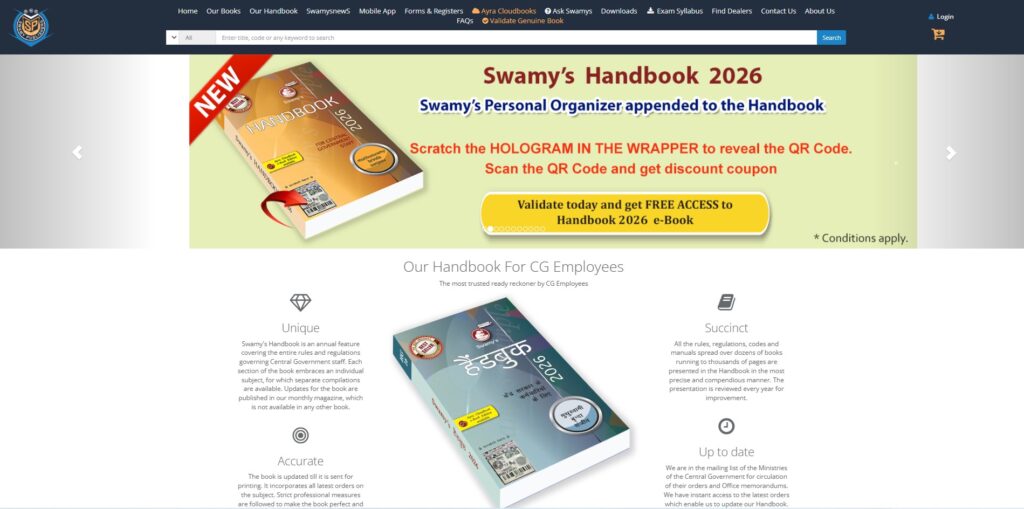
Swamy Handbooks have long been considered a trusted companion for Central Government employees. They present complex service rules, including Medical Attendance Rules, in a simplified, easy-to-understand manner. If service rules feel like a maze, Swamy Handbooks work like a reliable map.
Why Medical Attendance Rules Are Important
Medical Attendance Rules exist to protect employees from high medical costs. They ensure access to quality treatment while maintaining financial discipline within government spending. Simply put, MAR balances employee welfare with administrative accountability.
Role of Swamy Handbooks in Understanding MAR
Swamy Handbooks compile government orders, clarifications, and practical interpretations. Employees rely on them because they don’t just quote rules; they explain how those rules actually work in real life.
Legal Framework of Medical Attendance Rules
Medical Attendance Rules for Central Government employees are governed mainly by the Central Services (Medical Attendance) Rules, 1944, along with various amendments and Office Memorandums issued from time to time.
Applicability to Central Government Employees
These rules apply to:
Serving Central Government employees
Pensioners and family pensioners (with specific provisions)
Serving Employees
All regular Central Government employees are covered, irrespective of their pay level or department.
Pensioners and Family Pensioners
Pensioners can avail medical benefits through CGHS or reimbursement under CS(MA) Rules, depending on their location.
Definition of Authorized Medical Attendant (AMA)
An Authorized Medical Attendant (AMA) plays a central role in Medical Attendance Rules.
Who Can Be an AMA
An AMA is usually:
A Government doctor
A doctor working in a Government hospital
Any doctor specifically authorized by the government
Responsibilities of an AMA
The AMA examines the patient, prescribes treatment, and certifies the necessity of medical procedures. Without an AMA’s recommendation, reimbursement becomes difficult.
Eligibility Under Medical Attendance Rules
Eligible Employees
All Central Government employees, including temporary employees, are eligible under MAR.
Click here to go to the official website
Click here to download the full notification in PDF
Eligible Family Members
Definition of Family
Family generally includes:
Spouse
Children
Parents (in certain cases)
Dependency Criteria
Family members must be wholly dependent on the employee. Swamy Handbooks clearly explain dependency limits, which helps avoid confusion during claim submission.
Types of Medical Treatment Covered
Outpatient Treatment
Outpatient treatment includes consultation fees, medicines, and minor procedures. Reimbursement is allowed as per prescribed rates.
Inpatient / Hospitalization Treatment
Hospitalization expenses, including room charges, surgery, and diagnostics, are covered when treatment is taken in approved hospitals.
Emergency Medical Treatment
Emergency treatment is fully recognized under MAR. In life-threatening situations, prior permission is not required.
Central Government Health Scheme (CGHS) and MAR
CGHS is the backbone of healthcare for Central Government employees in notified cities.
CGHS Covered Areas
Employees in CGHS cities must avail treatment through CGHS dispensaries and empanelled hospitals.
Non-CGHS Areas and CS(MA) Rules
Employees posted in non-CGHS areas are governed by CS(MA) Rules and can claim reimbursement for medical expenses.
Choice Between CGHS and Fixed Medical Allowance
Employees cannot avail CGHS and Fixed Medical Allowance (FMA) simultaneously.
Fixed Medical Allowance (FMA)
Eligibility for FMA
Pensioners residing in non-CGHS areas can opt for Fixed Medical Allowance.
Amount and Payment of FMA
FMA is paid monthly along with pension and is meant for routine outpatient treatment.
Reimbursement of Medical Expenses
General Principles of Reimbursement
Reimbursement is subject to:
Approved rates
Authorized treatment
Submission of complete documents
Time Limit for Claim Submission
Claims should generally be submitted within the prescribed time, usually three months from completion of treatment.
Documents Required for Reimbursement
Common documents include:
Medical bills
Prescriptions
Discharge summary
AMA certificate
Treatment in Recognized and Non-Recognized Hospitals
Government / CGHS Recognized Hospitals
Treatment in recognized hospitals ensures smooth reimbursement as per CGHS rates.
Private Hospitals in Emergency Cases
In emergencies, treatment in private hospitals is permitted, and reimbursement is allowed subject to justification.
Special Provisions for Emergency Treatment
Meaning of Medical Emergency
An emergency is any condition where delay could risk life or cause serious harm.
Reimbursement in Emergency Cases
Swamy Handbooks clearly mention that emergency cases should not be rejected merely due to lack of prior permission.
Click here to go to the official website
Click here to download the full notification in PDF
Special Cases and Special Treatments
Chronic Diseases
Chronic illnesses like diabetes, cancer, and heart disease receive special consideration under MAR.
Costly and Specialized Treatments
High-cost treatments may require approval from competent authorities, but reimbursement is allowed as per entitlement.
Advance for Medical Treatment
Eligibility for Medical Advance
Employees can apply for medical advance for costly treatments or surgeries.
Procedure to Avail Advance
Medical advance is sanctioned based on estimates and adjusted against final bills.
Medical Claims for Pensioners
Procedure for Pensioners
Pensioners submit claims to designated authorities or CGHS wellness centers.
Role of Disbursing Authorities
Banks and pension disbursing authorities play a key role in facilitating claims.
Common Mistakes in Medical Claims
Errors That Lead to Rejection
Common mistakes include:
Incomplete documents
Treatment in unapproved hospitals without emergency proof
Delay in submission
Tips for Smooth Claim Processing
Reading Swamy Handbooks carefully is the easiest way to avoid claim rejection.
Importance of Swamy Handbooks for Employees
Why Employees Trust Swamy Handbooks
Swamy Handbooks translate complex rules into simple language. They are practical, reliable, and regularly updated.
How Swamy Handbooks Simplify MAR
They provide examples, clarifications, and real-life interpretations, making Medical Attendance Rules easy to follow.
Conclusion
Medical Attendance Rules are a vital welfare measure for Central Government employees and pensioners. When understood properly, they ensure stress-free access to healthcare without financial anxiety. Swamy Handbooks act as a guiding light, helping employees navigate these rules confidently. Knowing your medical rights is not just useful—it’s empowering.
Frequently Asked Questions (FAQs)
Q1. Are Medical Attendance Rules applicable to temporary employees?
Yes, temporary Central Government employees are also covered under MAR.
Q2. Can treatment in a private hospital be reimbursed?
Yes, especially in emergency cases or when no government hospital is available.
Q3. What is Fixed Medical Allowance meant for?
FMA is meant for routine outpatient medical expenses for pensioners in non-CGHS areas.
Q4. Is prior permission mandatory for emergency treatment?
No, prior permission is not required in genuine emergency situations.
Q5. Why are Swamy Handbooks preferred by government employees?
Because they simplify complex service rules and provide practical guidance.
Please don’t forget to leave a review.

Disclaimer
This article is for general informational purposes only. The details shared are based on commonly available interpretations of Medical Attendance Rules and references from Swamy Handbooks. Rules and guidelines may change from time to time. Readers are advised to verify the latest official government notifications or consult the concerned authority before acting on the information provided. The author holds no responsibility for any discrepancies or outcomes arising from its use.
For more information and updates, please follow the page and don’t forget to leave your comment.