
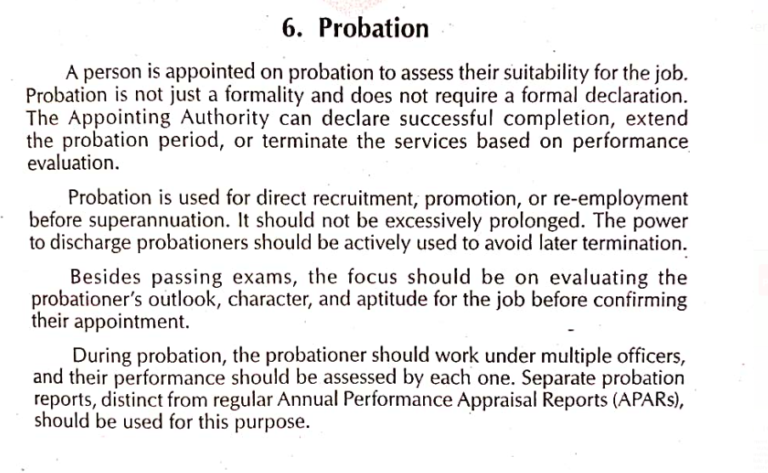
Probation
Probation refers to a trial period during which an employer assesses the performance, behavior, and adaptability of a newly hired employee. Typically lasting anywhere from three to six months—though this can vary depending on the company or role—this period acts as a safeguard for both the employer and the employee. It allows the organization to determine if the employee is a good fit for the job and the company culture. At the same time, it gives the employee an opportunity to evaluate whether the job and environment align with their career goals and expectations.
Starting a new job is always exciting, but it often comes with a period of uncertainty known as “probation.” Whether you’re stepping into your first job or making a career switch, probation is a term you’ll likely come across in your employment contract. But what exactly does probation mean, and why is it so important? Let’s break it down in a simple, straightforward way.
During probation, the expectations are often clearly defined. Most companies have performance benchmarks, goals, or KPIs that need to be achieved within this time. This might include hitting certain targets, mastering specific tools, or simply demonstrating a professional attitude and strong work ethic. Unlike permanent employees, those on probation may not have access to all the benefits of regular staff—such as health insurance, paid leave, or bonuses—until the probationary period is successfully completed.
One key thing to remember is that probation is not a punishment or a sign of doubt from your employer. It’s a standard HR practice used to ensure quality hires and reduce long-term hiring risks. Companies invest time and money in training and onboarding new talent. Probation is their way of making sure that investment pays off.
Click Here to Download PDF File

Disclaimer: The information provided on this blog is for general informational purposes only. All content is provided in good faith; however, we make no representation or warranty of any kind regarding the accuracy or completeness of any information.
About Probation
Probation also helps employees ease into their new roles. You’re not expected to be perfect on day one. The probation period is often treated as a learning curve, giving you time to understand your job responsibilities, learn company processes, and build relationships with your team. Managers and HR professionals usually offer feedback and check-ins during this time, guiding you through what’s expected and where improvements are needed.
However, it’s not just about skills. Employers also assess behavioral attributes such as punctuality, communication, teamwork, attitude, and accountability. For instance, someone might be great at their tasks but may struggle with collaboration or professionalism. These non-technical aspects can heavily influence whether the probation period ends in confirmation or termination.
Confirmation is the good part. If you meet or exceed expectations, your employment status becomes permanent, and you typically receive all the associated benefits. Some companies provide a confirmation letter or a revised offer letter stating the end of the probation period. You might also receive a salary hike or new role responsibilities upon confirmation.
But what if things don’t go as planned? If an employer feels the employee hasn’t met the required standards, they might choose to extend the probation period or, in some cases, terminate the employment. While this can be disheartening, it’s often handled professionally, with proper feedback provided. For employers, ending employment during probation is relatively straightforward, usually requiring a shorter notice period, as mentioned in the appointment letter.
For employees, it’s crucial to treat the probation period seriously. It’s your chance to shine, prove your value, and secure a permanent place within the company. That means showing up on time, being proactive, accepting feedback gracefully, and always being open to learning. The first few months set the tone for your professional journey within the organization, so it’s worth giving it your best shot.
It’s also worth noting that legal protections for probationary employees may differ from those of confirmed staff, depending on the country and local labor laws. In many regions, termination during probation doesn’t require elaborate procedures or severance, so job security isn’t guaranteed until confirmation.
To navigate the probation period successfully, always communicate openly with your manager. Seek feedback, clarify your responsibilities, and don’t hesitate to ask questions if something isn’t clear. Setting realistic goals and checking in on your progress regularly can make a big difference.
In conclusion, probation is an essential part of the hiring and onboarding process. It serves as a mutual evaluation window for both the employer and the employee. While it can be a bit nerve-wracking, it’s also a great opportunity to prove yourself and make a lasting impression. Embrace the learning process, stay committed, and use this time to lay a strong foundation for your future with the organization.
Please don’t forget to leave a review.
Disclaimer:
This blog post is intended for informational purposes only. All rights, references, and credits related to official government service rules and guidelines belong to Swamy’s Publications, the authoritative source on these matters. We acknowledge and extend our courtesy to Swamy’s Publication for their valuable work in compiling and publishing official content. This blog does not claim ownership or authorship of any content originally published by Swamy’s Publications.
For more information and updates please follow the page and don’t forget to leave your comment.